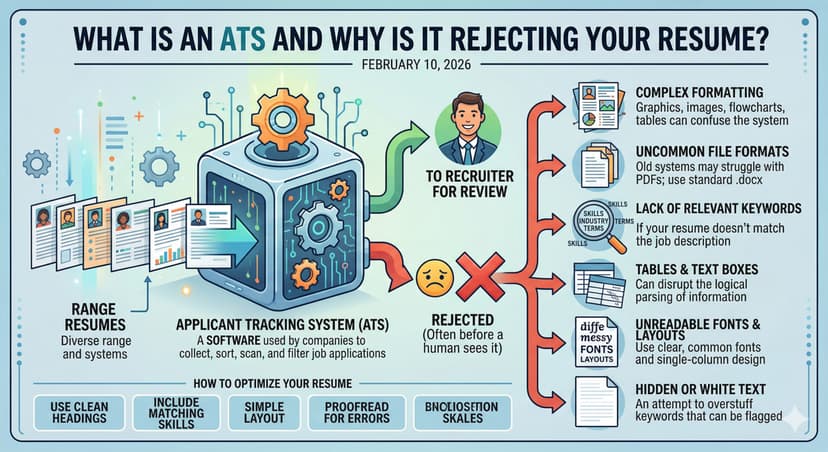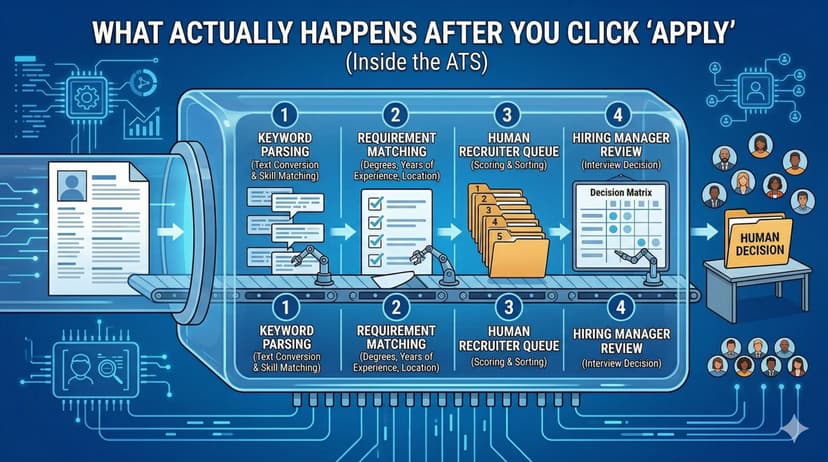
Every time you apply for a job online, your resume gets a score. Most applicants never see it — but it determines everything.
What Is an ATS Score?
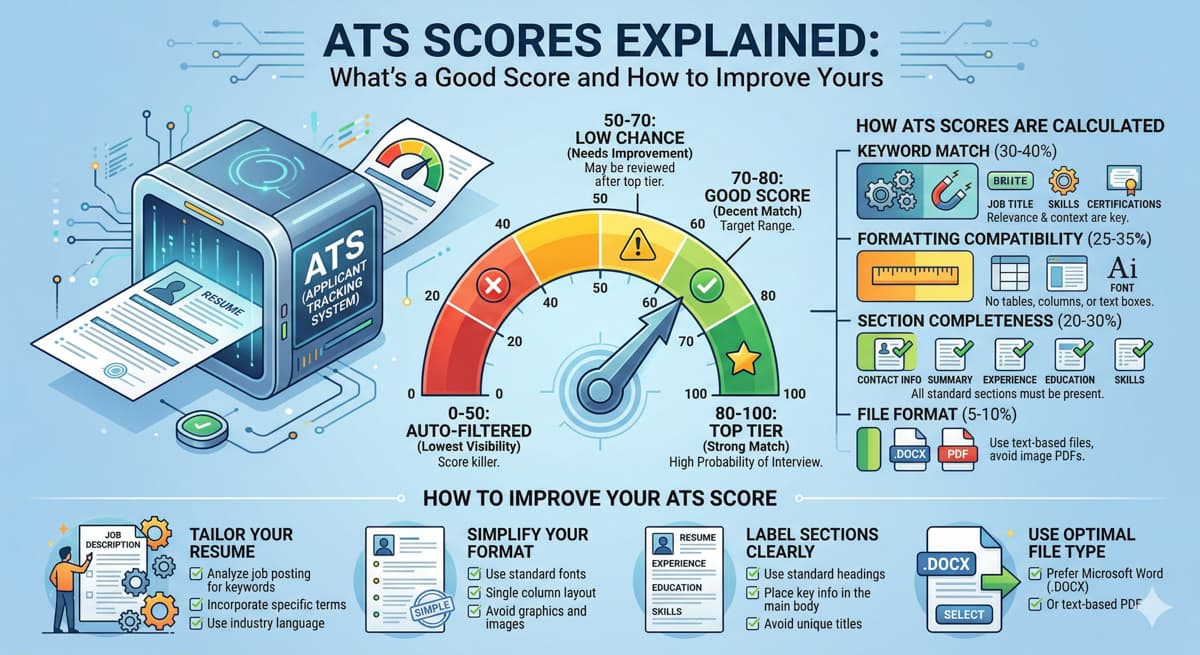
An ATS score is a numerical rating (typically 0-100) that measures how well your resume matches a specific job posting. The score is calculated based on:
- Keyword match rate — How many required skills and qualifications appear in your resume
- Skills alignment — Whether your listed skills match the job requirements
- Experience relevance — How closely your work history relates to the role
- Formatting compatibility — Whether the ATS can actually parse your resume correctly
What's a Good Score?
Here's the general breakdown:
- 90-100: Excellent match. Few obvious ATS or relevance gaps.
- 75-89: Strong match. Worth applying after a final human review.
- 60-74: Moderate match. Close the largest keyword, parsing, or impact gaps first.
- 40-59: Weak match. Tailoring or formatting work is likely needed.
- Below 40: Poor match. The resume is probably missing core role evidence.
A targeted rewrite can move a weak match into a stronger band by fixing concrete gaps: missing skills, vague bullets, weak title alignment, and parser-unfriendly formatting.
How Scoring Differs by ATS
Here's what most people don't realize: different ATS systems score differently.
- Greenhouse focuses heavily on keyword matching and skills alignment
- Lever emphasizes experience relevance and role-specific qualifications
- Workday has strict formatting requirements — tables and columns often fail entirely
- Taleo uses older parsing technology and struggles with modern resume formats
- iCIMS weighs education and certifications more heavily than some competitors
This is why testing against a single system isn't enough. A resume that scores 90 on Greenhouse might score 65 on Workday because of a formatting issue.
5 Ways to Improve Your Score
- Mirror exact keywords from the job posting — don't paraphrase
- Use a clean, single-column format — avoid tables, columns, and graphics
- Quantify every achievement — numbers are keywords too
- Match the job title in your summary or headline
- Test against multiple ATS systems before applying
Swiffit's multi-ATS simulation runs five ATS-style checks and shows where each platform pattern is likely to struggle.