You applied. It's been a week. Radio silence. Should you follow up? Yes. Here's why and how.
The Data on Following Up
The pattern is consistent across recruiters we've talked to and the broader job-search literature: - Candidates who follow up once receive meaningfully more callbacks than those who don't - A second well-timed follow-up (about two weeks later) adds another lift on top of that - A large share of offers happen after several touchpoints, not the first one - But most applicants give up before reaching that point
Following up is not desperate. It's expected. Recruiters manage 50-100 open roles simultaneously. Your application isn't being ignored — it's buried under 200 others. A well-timed follow-up moves you back to the top of the pile.
When to Follow Up
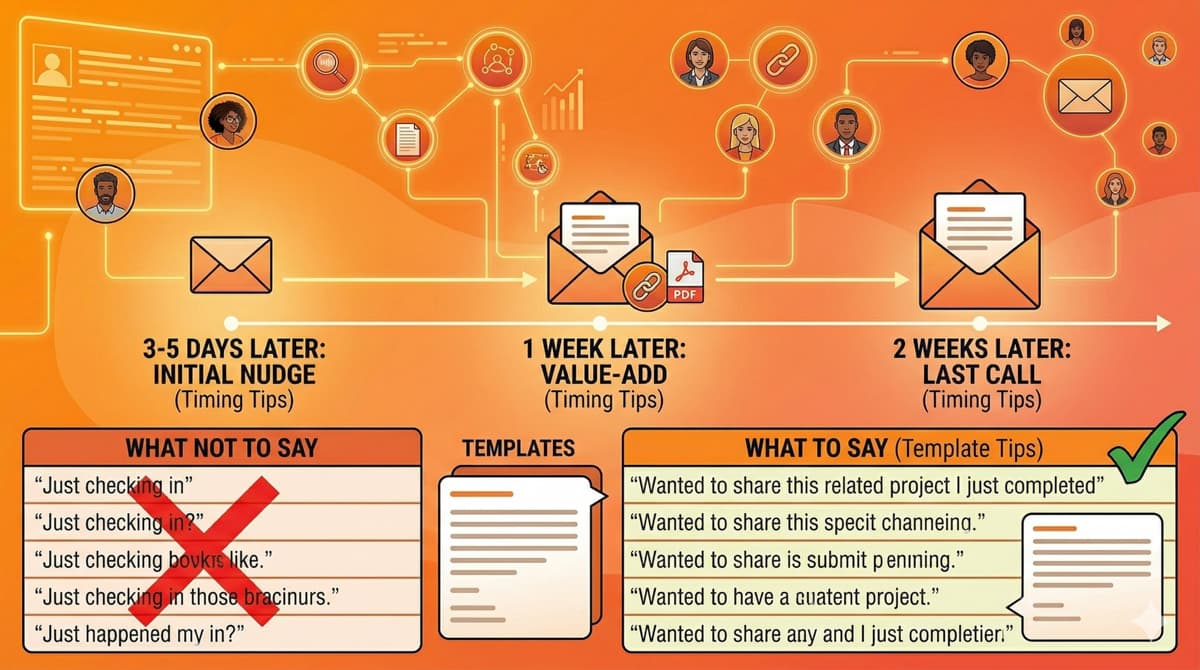
First follow-up: 7-10 days after applying
This is the sweet spot. Fewer than 5 days feels impatient. More than 14 days and they may have already moved to the next round of candidates.
Second follow-up: 14 days after the first
If you haven't heard back, a shorter, more direct note is appropriate.
After that: only if you have new information
Got a certification? Published something relevant? Received another offer? These are reasons to reach out again. "Just checking in" without new information starts to feel like noise after the second follow-up.
What to Say (First Follow-Up)
Keep it to 4 sentences:
- Reference the specific role — "I applied for the Senior Product Manager position on March 1st"
- Add one piece of value — Something you couldn't fit in your resume. A relevant project, a connection to their product, a metric
- Show company-specific interest — Mention something specific about their recent work, product, or mission
- Close with a soft ask — "I'd welcome the chance to discuss how my experience with X aligns with what you're building"
What NOT to Say
- "Just checking in" — Empty. Adds no value. Easy to ignore
- "I haven't heard back" — Passive-aggressive undertone. They know
- "I'm perfect for this role" — Let your qualifications speak for themselves
- "I'm applying to many companies" — Creates urgency but also signals you're not specifically interested in them
- Any mention of salary — Way too early
The Channel Matters
Email is the default. If you can find the recruiter or hiring manager's name (LinkedIn, company page), email them directly. A personalized email to the right person converts at 5x the rate of a reply to the generic careers@ inbox.
LinkedIn is a strong second channel. A connection request with a short note ("I recently applied for the PM role — would love to connect") is professional and expected.
Phone calls are almost always wrong for initial follow-ups. Unless you already have a relationship with the person, calling feels intrusive.
Setting Up the System
The biggest reason people don't follow up isn't laziness — it's forgetfulness. You apply on Monday, intend to follow up next week, and by then you've applied to 8 more jobs and forgotten about it.
This is where a tracking system pays for itself. When you apply, immediately set a 7-day reminder. When the reminder fires, follow up. Then set a 14-day reminder for the second follow-up.
Swiffit's Application Tracker does this automatically. When you enhance a resume and quick-track the application, a 7-day follow-up reminder is set in one click. When it's due, you see it on your dashboard and in your notification bell. No spreadsheet maintenance required.
The candidates who land interviews aren't always the most qualified. They're the ones who showed up twice.