The average recruiter spends 7.4 seconds on an initial resume review. In that time, they're making a keep-or-reject decision that determines whether you get an interview. So where exactly are they looking?
The Research
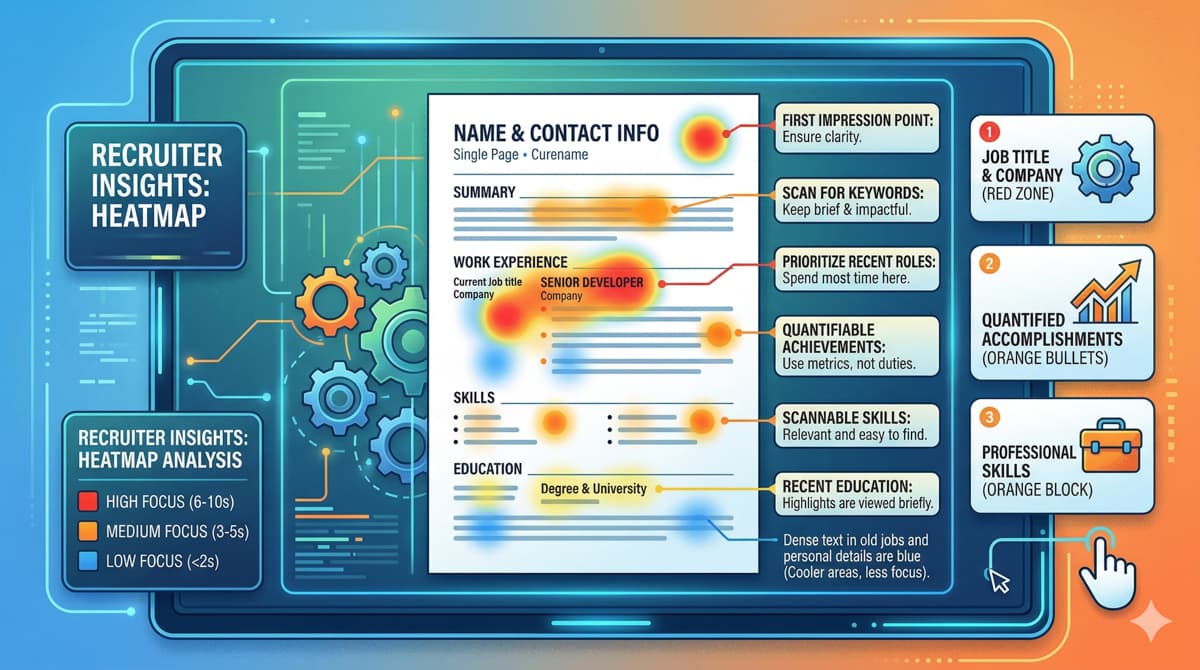
Eye-tracking studies of recruiters reveal consistent patterns in how resumes are scanned. The data shows that recruiters follow a predictable visual path — and most of what you write never gets read on the first pass.
Where Recruiters Look (Hot Zones)
1. Your name and current title — The first thing scanned. If your title doesn't match the role, some recruiters stop here.
2. Current company and tenure — Recruiters want to know where you work now and how long you've been there. Job-hopping (under 2 years per role) raises flags.
3. First bullet point of each role — This is critical. The first bullet under each job gets the most attention. If it's generic ("Responsible for managing projects"), you've already lost momentum.
4. Skills section — Quick scan for must-have qualifications. Recruiters often Ctrl+F for specific skills before reading anything else.
Where Recruiters Don't Look (Cold Zones)
1. Objective/summary statements — Unless they're highly specific to the role, these are often skipped entirely.
2. Second page — If you have a two-page resume, the second page gets significantly less attention. Some recruiters never scroll.
3. Education (for experienced hires) — After 5+ years of experience, education matters less than what you've actually done.
4. Generic bullet points — Bullets that start with "Responsible for" or "Assisted with" are mentally filtered out.
What This Means for Your Resume
Front-load everything. Your strongest, most relevant experience should be: - In the first bullet of your most recent role - Quantified with specific numbers - Written in active voice with strong action verbs
The difference between a resume that gets 7.4 seconds and one that gets 30+ seconds? The first few lines are compelling enough to keep reading.
Swiffit's recruiter heatmap simulates this exact scanning pattern on your resume, showing you what gets attention and what gets skipped — so you can restructure before applying.